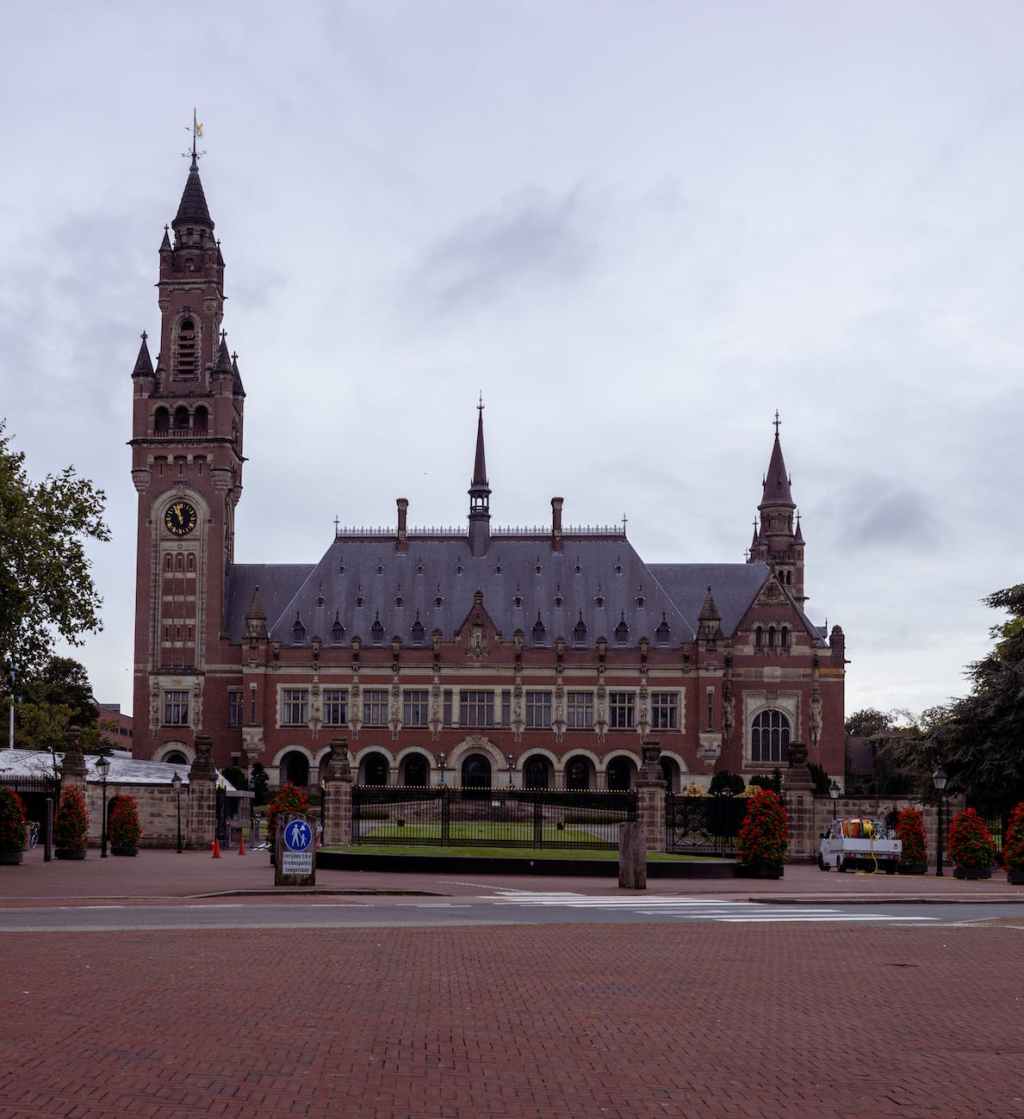
Given the application by South Africa before the ICJ on the possibility of genocide by Israel. A question grew in me regarding the possibility of Palestine suing Israel before the ICJ under the UN Genocide Convention.
The answer to that possibility seems not to be crystal clear. However, it seems that there is a possibility. It all boils down to procedural aspects and the criteria of the jurisdiction of the Court since it is only open to states.
The first element is whether Palestine, as a state, has access to the Court and if such is a possibility under the UN Charter and the Statute of the Court. The second element is an agreement reached by Israel and Palestine to resolve any type of dispute, and in essence, any dispute under the UN Genocide Convention.
The first element of the acceptance of the jurisdiction of the Court seems to open the possibility for Palestine. That is, given the openness upon which the UN Charter and the Statute of the ICJ are framed as to accept non-UN members to have access to the Court.
Is that even possible?
The answer is yes; it has been done in the past, an example is the Corfu Channel case, upon which Albania accepted the jurisdiction of the Court, without being a UN-Member. The construction of the acceptance of the jurisdiction of the Court was by way of article 35(2) of the ICJ Statute
«The conditions under which the Court shall be open to other states shall, subject to the special provisions contained in treaties in force, be laid down by the Security Council, but in no case shall such conditions place the parties in a position of inequality before the Court.»
It says that the jurisdiction of the Court shall be open to other states, meaning other states non members to the UN, and such acceptance of the Court should be subject by the Security Council.
Which it has done under Security Council Resolution number 9.
In essence, the conditions are two: one, that a non-UN member shall deposit with the Registrar of the Court a declaration that accepts the jurisdiction of the Court—quite naturally—and two, that it will comply in good faith with the decisions reached by the Court and accept the obligations of Article 94 of the UN Charter. This element should be different to the issue as to whether a given state should be considered or not as a member of the ICJ Statute, which is different and was a mechanism upon which Switzerland acceded to the Statute of the Court but was not a UN member.
The construction of Palestine, then, to accept the jurisdiction of the Court but not be a member of the Statute of the ICJ could be a simple letter to the registrar of the Court accepting the jurisdiction of the Court on a general basis or on a particular basis. That means the dispute regarding the Genocide Convention against Israel.
To my knowledge, this has not taken place. But it is a possibility for Palestine. Which then will go into the discussion as to whether this can be or not a possibility since the jurisdiction of the Court is only open to states. However, the construction of the argument goes as to whether Palestine is or is not a state; it might not be a state under the UN membership, but it could be regarded as a state under the UN Genocide Convention.
Which leads us to the second part. Once it is understood that there is the possibility of having access to the jurisdiction of the Court, then there is the issue of whether there is an agreement between Israel and Palestine to resolve their disputes before the Court.
It is important to recall that the agreement between states to resolve their disputes before the Court could be under different types of agreements. That is under a treaty, under the optional clause of Article 36(2) of the ICJ Statute, a special agreement, and as a forum prorrogatum.
It must be stressed that participation as a state in the ICJ statute is not sufficient; there is a need to accept the jurisdiction of the Court. Israel, for example, is a party member of the UN but has not accepted the jurisdiction of the Court due to its lack of acceptance of the jurisdiction per Article 36(2) of the ICJ Statute.
In that sense, there is no jurisdiction under the head of the optional clause. However, Israel and Palestine are members of the UN Genocide Convention of 1948, which means that under Article IX, both states have accepted to resolve their dispute under the Genocide Convention.
In principle, then, there is the possibility that Palestine could have an application before the ICJ regarding the possible violations of Article III of the Genocide Convention against Israel.
However, there seems to be an element lacking, and it is not as to the issue of whether Palestine is or is not a state, but it seems, from my point of view, that Palestine has not informed the ICJ that it accepts the jurisdiction of the Court regarding at least the interpretation and application of the Genocide Convention.
Is there a possibility for Palestine to do it? Certainly.






 Tu Globalista: Lo que sucede en el mundo.
Deja un comentario